

Advanced eco-computational methods | for rapid optimization and integration of environmental performance in architecture
Team
Jonathan Natanian
Collaborators
Prof. Thomas Wortmann, Dr. Francesco De Luca
Years
2020-2021
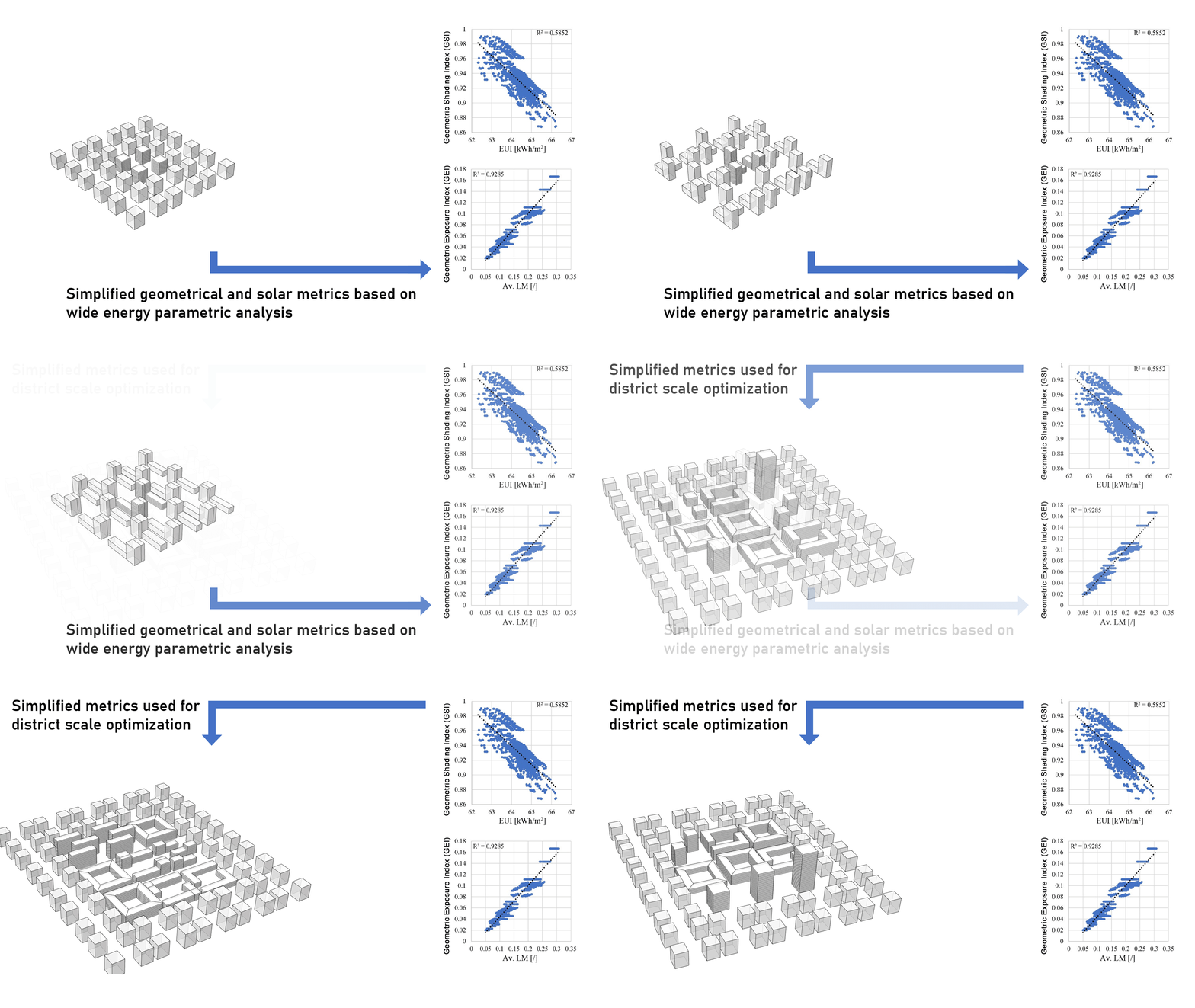
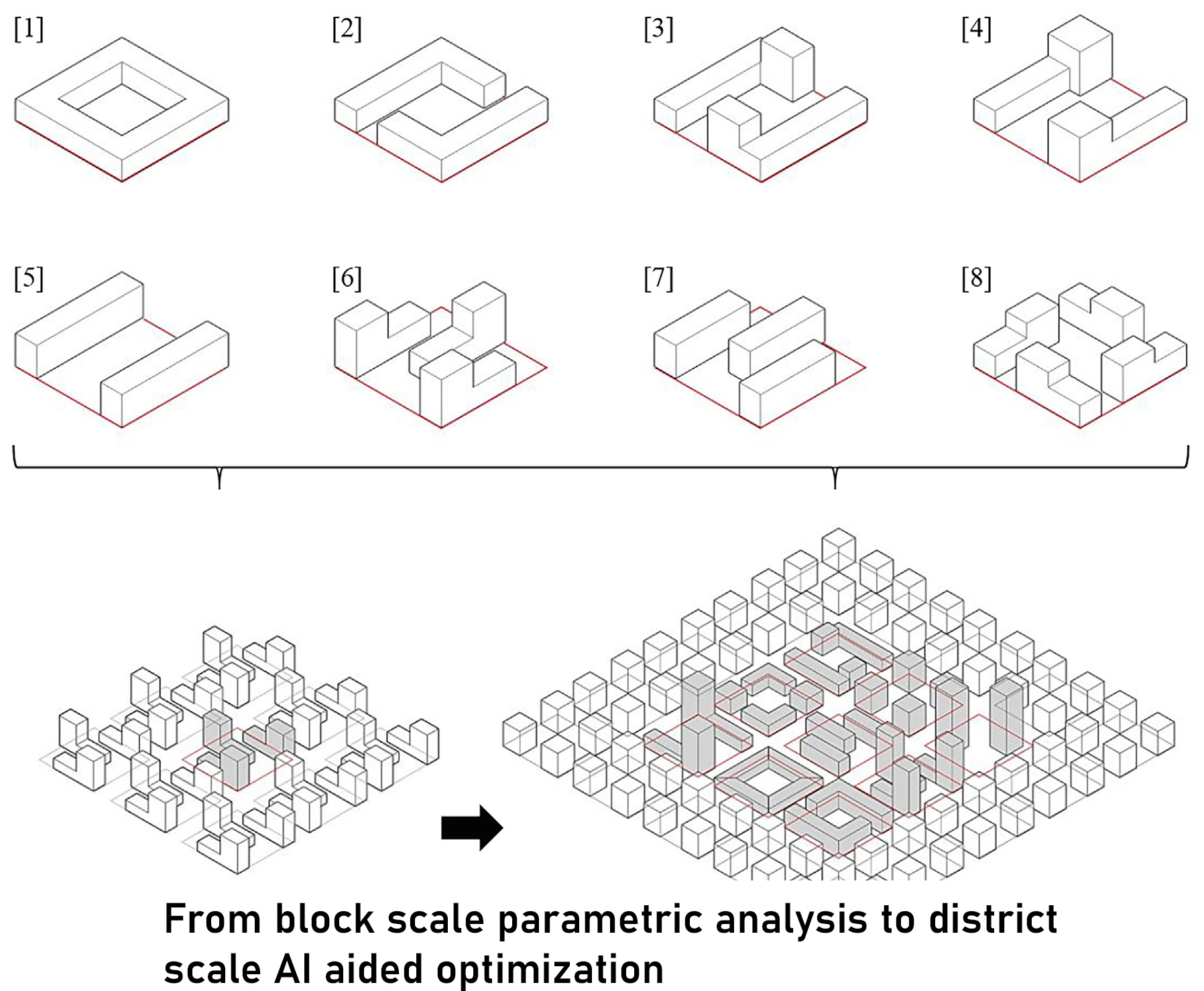
This project develops and applies computational strategies that enable designers to efficiently explore large design spaces while integrating environmental performance from the earliest stages. Building on recent work with simplified performance metrics and multi-objective optimisation, the project advances methods that couple parametric modelling, evolutionary algorithms, and rapid evaluation procedures to navigate thousands of design alternatives. These approaches expose key relationships between form, energy use, microclimate, and urban morphology, supporting fast, evidence-based decisions both at the building and district scales. By reducing simulation complexity without compromising environmental insight, the project empowers architects and planners to integrate performance-driven thinking into day-to-day practice, offering a robust toolkit for responsive, energy-efficient architectural and urban form finding.
Advanced eco-computational methods | for rapid optimization and integration of environmental performance in architecture
This project develops and applies computational strategies that enable designers to efficiently explore large design spaces while integrating environmental performance from the earliest stages. Building on… more
recent work with simplified performance metrics and multi-objective optimisation, the project advances methods that couple parametric modelling, evolutionary algorithms, and rapid evaluation procedures to navigate thousands of design alternatives. These approaches expose key relationships between form, energy use, microclimate, and urban morphology, supporting fast, evidence-based decisions both at the building and district scales. By reducing simulation complexity without compromising environmental insight, the project empowers architects and planners to integrate performance-driven thinking into day-to-day practice, offering a robust toolkit for responsive, energy-efficient architectural and urban form finding.
Team
Jonathan Natanian
Collaborators
Prof. Thomas Wortmann, Dr. Francesco De Luca
Years
2020-2021